

Because Invalidation Kills: Normalizing the Experience of Wanting to Die By Suicide
And practical steps to saving yourself and building a life worth living

A note on content: Today being World Suicide Prevention Day felt like the right time to share this piece about my experience with suicidal thoughts and what helped me survive. It's written to be helpful, but it's also heavy. Trust yourself about whether this is something you want to read today.
A note on perspective: I'm writing from my own lived experience and don't intend to speak for all autistic people, all suicidal people, or any other group. I also recognize and acknowledge that my privilege and access to resources are significant factors in why I'm alive today. At the end of this essay, I share free and low-cost resources—everyone deserves access to life-saving support, regardless of their circumstances.
Wanting to end my life felt like stumbling through the world as a burn victim of sorts: raw flesh exposed and unprotected. Bumping into counter corners, dirt from my kids' shoes and cat hair sticking and healing into the wounds; wounds that ripped open like tracing paper at every effort to tend to the mess I was making.
It was a pain that I couldn't escape or understand, and that no one could see.

If these were actual burns, the issue would be obvious. The pain would be palpable. I'd probably be offered wound coverings, antiseptic, and tools to cope with the distress. No one would doubt the searing pain. People would send flowers, they’d ask how I was coping. My loved ones would get support, too. Instead, most of us are too ashamed to seek support, and when we do, many people avoid acknowledging what couldn’t be more real.
This is why being suicidal was initially a profoundly invalidating experience. Like the acquaintance who said "you can't be depressed! You just took a beautiful trip!" or the therapist who spent our first session baffled, saying "but you've got so much going for you!" She closed the session by peddling a rubber Livestrong-style bracelet with motivational quotes from her online shop; I wanted to die.
She also threw out a potential diagnosis which, while it turned out to be inaccurate, led me to an office two summers ago with a psychologist who got my attention.
"This works," the doctor said, referring to Dialectical Behavior Therapy (DBT), the therapeutic gold standard for suicidal people "but not if you kill yourself first." I tilted my head to understand. Reading my face, he continued, "you have to physically stay alive long enough for treatment to begin working. Do you think you can do that?"
From his brown chair across a gray room, he could see the burns. He didn't try to talk me out of the pain, instead he sat with me in my tender, marbled darkness. It was the first real step toward saving my life.
It's been more than two years since that meeting, and thanks to the support of brilliant psychiatrists and therapists, I no longer live in constant fear of dying by suicide, but it hasn't been a linear path and I'm not yet free of the searing pain; recovery rarely works that way. It's been a jagged journey with progress punctuated by setbacks and good days that collapse into bad nights, good weeks that plummet into very hard weekends. Psychologists note that this is normal; healing from suicidality almost always includes periods that feel like backsliding, and those are not failures so much as part of the process of learning to cope.
I have learned that burns need to be cleaned and covered, and experts that can see these burns teach me how to treat my wounds and minimize further injury. Psychologists who study post-crisis recovery note that the shift from seeing pain as forever and inescapable to something temporary and treatable, is a key marker of true resilience. And for me, it's been the difference-maker in staying alive.
When I was in a crisis, I didn't need platitudes; I needed to understand what was happening in order to feel less like a confounding burden, I needed to accept and accommodate my reduced capacity, and I needed practical steps that could help me manage and reduce vulnerability to intense emotions.
Understanding Why We Want to Die: The Science Behind Suicidal Thoughts
The Interpersonal Theory of Suicide, developed by psychologist Thomas Joiner, helps explain why some people develop the desire to end their lives and what pushes them from thinking to acting. Understanding this framework helped me make sense of my own experience and gave me tools to interrupt the cycle.
The theory identifies three key factors that interact to create suicide risk: perceived burdensomeness, thwarted belongingness, and acquired capacity. Knowing about these can help you make interpretations and choices to keep yourself safer.
Feeling Like a Burden
Perceived burdensomeness is when you believe that your death would be worth more to the people you love than your life. It's the crushing weight of thinking you're making everyone's life harder just by existing. When the sadness is so intense and won’t lift, and feels like it never will, what can you even do except feel guilty for it?
For me, this feeling intensified during what I now recognize as autistic burnout. As I wrote in Too Pretty to Be Autistic:
When workplace expectations were obscured, when goalposts moved, when I witnessed leaders alternate ignoring and justifying an abandonment of values–my neurodivergence magnified the damage; my entire construct of my workplace and the ways I’d contributed to its success broke, taking my sense of self with it.
I began to lose my ability to mask and perform neurotypicality. My gripping white knuckles became more translucent until hands weren’t on the wheel anymore. I was depressed, anxious, and descending into a systemic shutdown…
Autistic burnout involves losing the ability to constantly mask and pretend to be okay, meaning suddenly I was sparring with emotions in ways I'd never been expected to. I was used to stuffing uncomfortable feelings away and pushing through—suddenly I couldn't. I had no map for how to function through pain I couldn't ignore. I'd lost the ability to pretend.
As I said in Prelude to a New Chapter:
When the familiar tools and coping strategies weren’t working, my urgent, panicked scramble to get better turned into a powerless slip into an unfamiliar, horrifying darkness. I slipped, and I kept slipping. I slipped until the idea of taking my own life made absolute, perfect sense.
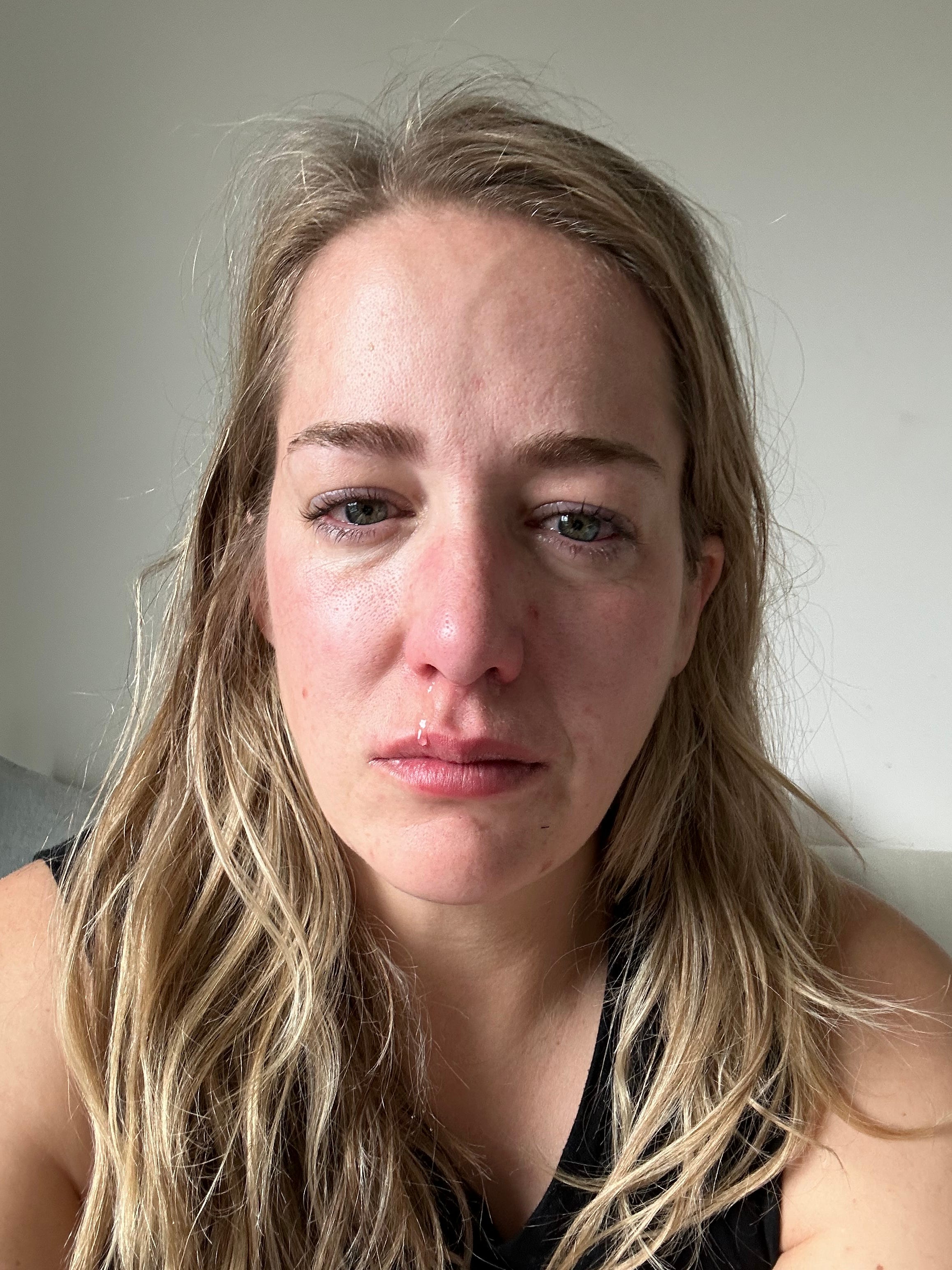
This burden logic is particularly seductive for those with complex trauma or whose neurological wiring has been pathologized since childhood, such as those who are autistic or have ADHD, who've spent decades translating their natural intensity into a lifestyle of apology. We’ve learned to see our needs as impositions, our emotions as something to “make go away,” our very way of being as something requiring correction or concealment.
Research shows that autistic adults are nearly three times more likely to die by suicide compared to non-autistic people, and the risk is even higher for those without intellectual disabilities—over five times more likely. The pressure to mask autistic traits and appear neurotypical has been specifically linked to increased suicidality.
Crucially, these beliefs are often distorted and untrue, but they feel absolutely real to the person experiencing them. The logic seems airtight: If I am the problem, then removing myself solves the problem. If my existence causes suffering, then my non-existence eliminates suffering. The syllogism feels unassailable because it's built on real pain, real pain that hurts people you really love.
The data is very clear, though, that when someone dies by suicide it does not decrease the burden on those they love. In fact, they may be forever burdened with questions like “what if I’d only...” And it can hurt the people you love in other ways–death could also serve as a curriculum for others in crisis. When we choose suicide, we model it as a viable way out of pain.
A Canadian study found that adolescents who lost a friend or peer to suicide were two to four times more likely to attempt suicide themselves compared to those who had not been exposed. The effect is even more profound when the loss is a parent. Children and teens who lose a parent to suicide are three times more likely to die by suicide themselves, even decades later.
At my lowest points, I carried these studies around with me, printed out and folded and unfolded many times. While my kids deserved an emotionally regulated parent, knowing they were better off with me doing my best, even if imperfect, than with me dead, helped me out-think the burden logic.
My intention isn’t to guilt you into staying alive. It's about understanding that the Interpersonal Theory reveals why the burden logic feels so compelling, and why it's based on incomplete information. When all three elements of the theory are active, suicide feels not just reasonable but necessary. But when you understand the mechanics, you can begin to interrupt them.
Thwarted Belongingness
This second component has to do with feeling fundamentally disconnected from others, like you don't truly belong anywhere or with anyone.
Thwarted belongingness can happen through lost community due to a move, job change, job loss, or values shift. It intensifies through disillusionment in systems, social structures, organizations, or groups that you trusted. Bullying, social rejection, and isolation can all feed this sense of not belonging.
For autistic people, this feeling often starts early. I’d come home from elementary school, decompress by watching Oprah with a bowl of ice cream (literally every day), then spend hours staring into the mirror, practicing expressions and running social scripts. We learn to mask our natural responses and mimic neurotypical behavior, but underneath, we often feel like we're watching human connection through glass, never quite able to break through to genuine belonging.
In my case, belonging was thwarted in multiple ways. Losing the ability to perform neurotypicality resulted in a sense of alienation due to feeling incapable, incompetent. Separately, the one place in the world where things had always made sense to me—business, and a specific context where I felt deeply invested–Meta and their stated values, was a construct fully destroyed after I saw the company I trusted making decisions that hurt people and the business. When I did my part to get us back on track, I was literally removed from the rooms I needed to be in to do my job. I was told that I was the problem, that I was the risk. For a while, I internalized this.
Healing has required finding new communities who share my values, and working to right the wrongs that I was a part of. If I were to walk into the same rooms that excluded me 3 years ago, I’d likely feel a profound absence of belonging. So I don’t go looking for acceptance there, instead, I walk into rooms of other online safety advocates, others with lived experience with suicide or neurodivergence, and rooms that don’t require I compromise myself to belong.
Acquired Capacity
The third piece of this theoretical puzzle is acquired capacity: the ability to overcome your natural self-preservation instincts. Most people, even when they desperately want to die, can't overcome the biological drive to stay alive. But through repeated exposure to painful or frightening experiences, some of us develop the capacity to act on suicidal thoughts.
This was perhaps the most terrifying part of my experience. Each time I hoarded prescription medications or researched methods of fatal self-injury, I was desensitizing myself to the fear and pain involved. Each time I drove down to the beach with sleeping pills, weights, and rope in my trunk, contemplating just walking into the water and ending the pain, like the young man with the backpack who didn't make it home, I was building my capacity to actually do it.
This is a very dangerous path. The theory helps explain why people with histories of self-harm, those who've experienced physical trauma, young people exposed to pro-suicide content on social media, or those exposed to others' pain and injury (like healthcare workers and veterans) have higher suicide rates—not because they want to die more, but because they've developed the ability to overcome the natural fear that protects most of us.
Those with the capacity to overcome self-preservation instincts must reduce access to means and over-index on getting ahead of burden logic and pre-thwarting thwarted belongingness. This is why mental health care is essential.
What Saved My Life: Learning to Tend the Burns
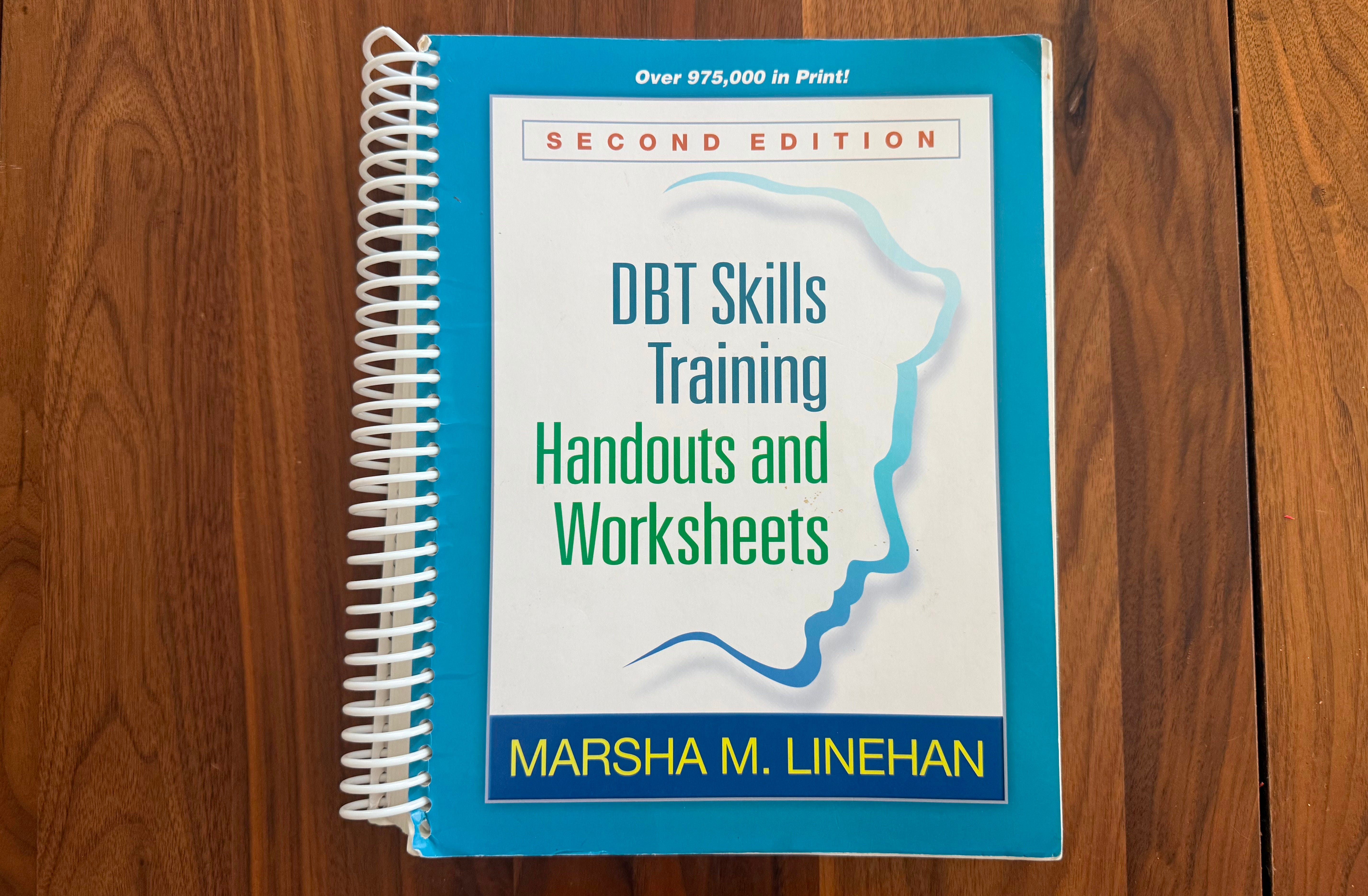
Studies have shown that DBT not only reduces suicidal ideation but can cut actual suicide attempts by about 50% among high-risk individuals. DBT is based on four core modules: emotional regulation, interpersonal effectiveness, distress tolerance, and mindfulness. The idea is to equip you with tools to survive acute crises and also build a “life worth living.”
As I wrote in Too Pretty to Be Autistic,
I found DBT because it was created to help suicidal people, and for me it also offered a framework to navigate my sense of "missing software." DBT helps me recognize when I am performing emotional wellness for others' comfort and to make choices based on what's best for my needs and values, even if it's not best for everyone else.
DBT also taught me practical skills that I use and practice every day.
What to Do in Crisis: Surviving the Moment
When you're in acute suicidal crisis, the goal isn't to solve everything—it's just to survive the moment. Solving everything is actually an explicit non-goal, because we rarely come up with the best solutions when we’re emotionally dysregulated. Think of it like emergency first aid for those severe burns: you're not trying to heal completely right now, you're just trying to prevent further damage and get to safety.
Use distress tolerance skills. These are techniques specifically designed to help you get through intense emotional pain without making it worse:
Temperature change: Hold ice cubes, take a hot shower, or splash cold water on your face. Extreme temperatures can interrupt the emotional escalation.
Intense exercise: Do jumping jacks, run up and down stairs, or do push-ups until you're breathing hard. Physical exertion changes your body chemistry.
Paced breathing: Breathe out longer than you breathe in. Try counting 4 in, 6 out.
Distraction: Watch funny videos, do a puzzle, clean something. The goal is to occupy your mind until the intensity passes.
Reach out for help. Like I’ve done many times, call or text 988 for the Suicide & Crisis Lifeline, contact a professional, or reach out to a trusted friend. In DBT, we decide in advance who we can call in those moments - a list of people who are safe to tell we’re feeling that way (mine was very short) and a list of people who are safe to talk to about anything else, to momentarily distract. I hate phone calls, but I still made those lists, and I used them.
What to Do When You're Not in Crisis: Building Your Safety Net
Create a safety plan. This is essentially a written, step-by-step guide you make for your future self, so that when you’re overwhelmed and thinking of suicide, you don’t have to figure out what to do, you can follow a plan you prepared. Yours could include warning signs to watch for, coping strategies that have worked for you, and steps to make you safer in the immediate term.
Reduce means. Remove or limit access to things you might use to harm yourself. This might mean asking someone to hold your medications, removing weapons from your home, or avoiding certain locations when you’re feeling dysregulated. This is about creating barriers between your future self and suicidal action.
Consider your environment. What makes your suicidal thoughts worse? What helps? You might need to limit certain news, social media, or even well-meaning but triggering conversations. You might need less or more light, less or more structure, less or more social connection. Are you in a profoundly invalidating job, relationship? What needs to change?
Build emotion regulation skills. One of the most valuable things I learned was how to identify and name emotions as they arise in my body. When I notice tension in my shoulders and a tight chest, I can recognize that as anxiety and ask myself: what information is this emotion giving me? What does anxiety want me to know or do? Instead of immediately acting on the feeling or trying to make it go away, I can observe it with curiosity.
The Ongoing Reality: Learning to Live with the Scars
I'm still constantly invalidated. Even relatively well-informed, well-meaning people in my life say things like "you're not in burnout! Look at these essays you write!" I can tell myself, and sometimes them too, that both things can be true. I am able to write an essay, but it’ll take me hours upon hours and I’ll probably spend more hours on either end curled in a ball, rocking back and forth, crying. I can speak on a panel, with a huge amount of prep and support and planning and scripting, but I really can't manage any amount of interpersonal ambiguity without fully melting down. I often can't return texts, phone calls are even harder. I work with an occupational therapist to be able to do things like regulate my sleep, check my mail, and file my taxes. I’m still recovering from burnout, or learning to live with an altered capacity—I’m not sure which, yet. And I’m okay with that.
I've saved my life by accepting that my experience and expectations of myself might not match up with someone else’s.
Someone else saying "you can surely handle another big corporate job by now?" doesn't bury me in shame anymore. Instead, I feel compassion for both of us. So while I still feel extremely misunderstood by most, I can provide myself understanding. I’m learning the skills to validate myself, to pep talk myself, and learning how to seek that understanding in therapy and with safe people who are willing to make space for my experience even if it doesn’t fit into their paradigm.
I still feel like a burden, I still wrestle with the difference between what I want to be doing and what I'm capable of doing, I still hate the way bad news can derail my entire day and require what feels like a small forest worth of tissues. But instead of thinking "why am I this way?" or "what's wrong with me?" I can be kind and gentle with myself: "it takes a lot of time and processing to integrate big emotions right now." I can turn to emotion regulation skills that I've learned in DBT, like observing the sensations in my body and mapping those to specific emotions, then working to understand and validate why I might be feeling that emotion.
I've learned that my emotions give me information, and I am working to better interpret these signals in the context of my needs, values, and unique trauma history, without always confusing them for instructions to take immediate action, ruminate, or withdraw.
The burns are healing, but they've left scars. Most days the scar tissue feels tight and uncomfortable. On a rare day, I barely notice it. But I've learned to tend to these places with the same care I'd give any other injury—gently, consistently, with the help of experts who understand how to treat this kind of damage.
Why This Matters: Breaking the Silence
As I wrote in Backpack in the Water,
I stood frozen in my kitchen while my brother in suffering slowly sank to the silty bottom. Had we passed each other walking our dogs or at the grocery store? Would we have ever imagined knowing this shared darkness? Is there a resource or a community that would have made the difference? Would coming out with my story have helped him feel less alone?
We need to normalize talking about suicidal thoughts not because they're pleasant or easy, but because silence kills. When we don't have language for these experiences, when we don't have frameworks for understanding them, when we're too ashamed to reach out—that's when the mathematical equation becomes: subtract me, problem solved.
But the math is wrong. Your death is not worth more than your life.
And if you're reading this while standing at your own water's edge, metaphorical or literal, l need to say this: your pain is real, and so is your capacity to heal. The skills that saved my life can save yours too, but you have to stay alive long enough to learn them. Do you think you can do that?
Immediate Crisis Support
988 Suicide & Crisis Lifeline: Call or text 988, or chat at 988lifeline.org
Crisis Text Line: Text HOME to 741741
Veterans Crisis Line: Call 988 and press 1, or text 838255
LGBTQI+ National Hotline: 1-888-843-4564
Trans Lifeline: 877-565-8860
Safety Planning Resources
My3 App: Free safety planning app available in app stores
Safety Planning Guide: Download free templates at suicidesafetyplan.com
Free DBT Resources
Rutgers University offers DBT YouTube videos to learn and implement skills
DBT Self Help includes an overview of the modules and a deep dive into skills
DBT Tools: Free worksheets and practice sheets
Dialectical Behavior Therapy: Free 26-week course or do-at-your-own-pace modules
Professional Support
Psychology Today: Find therapists trained in DBT and suicide prevention, filter by insurance or sliding scale
DBT-Linehan Board: Directory of DBT-trained providers
Therahive offers online DBT skills groups including those for adolescents, parents, as well as a free mini course
Grouport offers online, affordable DBT-informed skills groups
Autism-Specific Resources
Self Care for Autistic People by Dr. Megan Anna Neff
Resources on Autistic Burnout Recovery: Free resources on masking, burnout recovery, and more from Dr. Megan Anna Neff
The Neurodivergent Woman Podcast: By Dr. Michelle Livock and Monique Mitchelson
My favorites on Substack: Lindsey Mackereth and Bridgette Hamstead
Occupational Therapy Directory for those struggling with functional loss or in need of additional support
What an incredible gift to share your experience here, and to offer help in a way that speaks truth
Brilliant essay, Sarah. All of it resonates, especially the invisible burn victim analogy. Oh, and that therapist who said, "But you have so much going for you!" My equivalent was the doc who waved a hand at me and said, "You look relaxed" and the other one who said, "Meh, you just got in a funk." (That second remark was after I'd spent 2 weeks locked in a psych ward.) Sheesh, these people 🙄
You might want to check out my recent memoir, *Ticket to Madland: How I Went Insane and Met New People.* It's intense, but also hopeful and entertaining. I'd love your thoughts on it. 💜