

Meta to Make Platform Changes and Pay Nearly $1 Billion in Child Safety Case
Meta is a "public nuisance" that is effectively polluting childhood and burdening families, hospitals, schools, and law enforcement with the clean-up effort, says New Mexico

Hello! My name is Kelly Stonelake. I worked at Meta from 2009 until 2024, including as Director of Product Marketing. After experiencing sexual harassment and witnessing child safety failings, plus Meta’s retaliation toward women speaking up about it, I filed a lawsuit and became a federal whistleblower and advocate for legislative reform. I write this Overturned newsletter on tech accountability and broken systems of power.
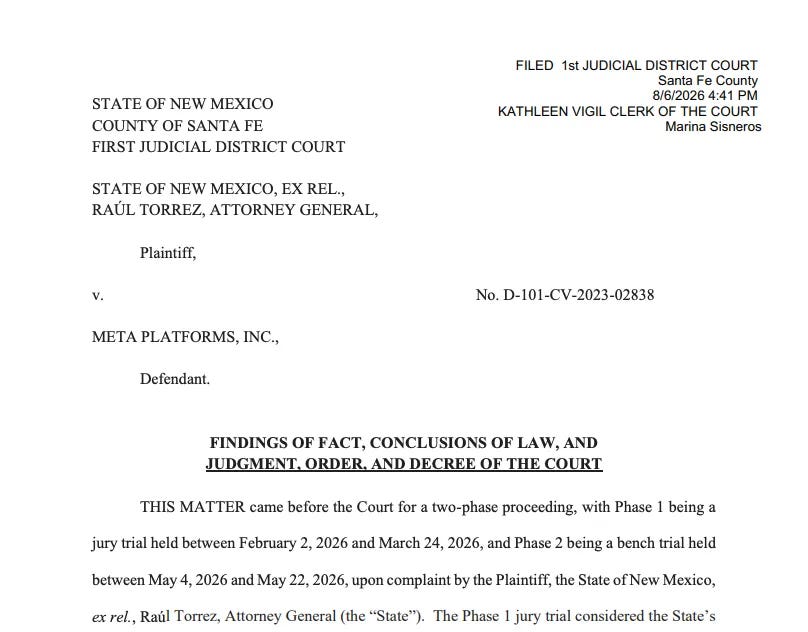
Yesterday, a New Mexico judge issued a 68-page final order against Meta that does considerably more than affirm the $375 million jury verdict the company received earlier this year.

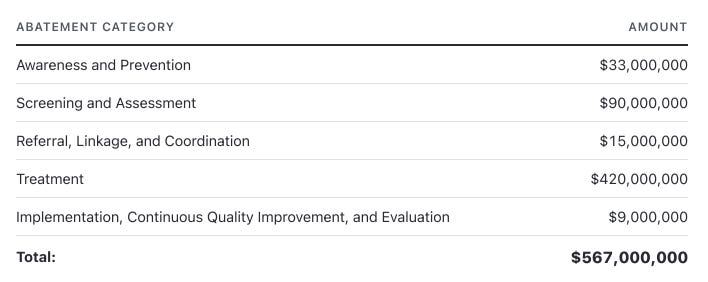
The court also ordered Meta to deposit $567 million into a fund for prevention, screening, treatment, and other programs addressing the damage associated with its platforms. Together, the two financial components total $942 million, before counting what Meta will have to spend complying with the rest of the order.
But the money is only part of the story.
For the next five years, Meta is supposed to change how Facebook and Instagram operate for people in New Mexico. It must restrict when minors receive notifications, hide like counts by default, impose a monthly usage cap, prevent adults from being algorithmically connected to children, improve age assurance, strengthen sextortion protections, submit child-sexual-abuse reports to human review, and show users safety information on the platforms themselves.
The court found that Meta’s platforms had become a public nuisance whose effects spread outward into New Mexico’s schools, hospitals, families, courts, and law-enforcement systems.
And the metaphor the court used to explain that conclusion came from Meta itself.
Meta itself offered the analogy of a factory emitting pollution to argue that any relief should be limited to stopping and repairing the harm, without closing the factory.
The judge accepted that framework, then applied it against Meta:
Meta’s platforms are the factory.
The psychological harm and sexual exploitation of children are the pollution.
The “pollution” spreads beyond Meta’s platforms and burdens children, families, schools, hospitals, and law enforcement.
The court stressed that it was not shutting down Facebook or Instagram or directly regulating particular content. It was requiring Meta to address the harms created by the way its platforms operate.
I break down the 68-page document below, but first would love to share a conversation I had with the BBC this morning while sitting outside my 12-year-old’s hockey practice.
On why this judgment matters:
“We’re talking about a meaningful impact on their bottom line, which is the only way to get their attention and to drive actual change.”
“When we start thinking about how you extrapolate the damages to children on a state-by-state or a per-capita level, we’re talking about a meaningful impact on their bottom line.”
On Meta claiming their products aren’t harmful and they work hard to keep kids safe:
“Meta knows their products cause harm, don’t do enough to change that, and then really tries to perform care.”
“What the public gets to see, and what jurors get to see, and judges get to see, is a mountain of evidence that makes very clear that the opposite is true.”
“Giving parents the “peace of mind” of parental controls or oversight, [controls] not actually working, and then blaming parents and lobbying to keep them out of courtrooms is a real move in deflection and smoke and mirrors.”
Like what Meta’s orientation toward youth safety that I saw first hand in Horizon:
“We’re going to imply we have parental controls, but they won’t actually exist when we launch the product. We’re just going to make sure parents feel like their kids are safe.”
On Meta’s opportunity:
“You have to put on your hat as if the job was to keep people that use your product safe and to deliver on the promise that technology should improve our lives.”
“Meta had the opportunity to be doing that from the beginning, but they have really focused on how to maximize profit at the cost of everything else.”
Breaking down the court’s order:
Essential facts
The case was brought by New Mexico Attorney General Raúl Torrez against Meta.
The proceeding had two phases:
A jury trial from February 2 to March 24, 2026, addressing violations of New Mexico’s Unfair Practices Act.
A bench trial from May 4 to May 22, addressing whether Meta created a public nuisance and what it must do to abate it.
The jury found 75,000 Unfair Practices Act violations and imposed the maximum $5,000 penalty for each, totaling $375 million. The violations concerned New Mexicans under 18 who used Meta’s platforms without being properly informed of their risks, or who would not have used them if properly informed. (¶¶ 8–12, pp. 3–4)
Yesterday’s final order requires Meta to deposit another $567 million into an abatement fund. (¶ 121, p. 45)
The five-year period begins with the August 6 order but is paused during an appeal if Meta posts a supersedeas bond (a surety bond that a court requires from an appellant who wants to delay payment of a judgment until an appeal is over). That means an appeal could substantially delay the actual implementation clock. (¶ 131, pp. 48–49)
Meta must report publicly to the court and the State every June 30 and December 31 on its compliance with every abatement requirement. (¶ 132, p. 49)
The court anticipates additional orders and hearings governing how the $567 million fund will be administered and spent. (¶ 130, p. 48)
What the court found
Meta’s platforms are “a cause of and substantial contributing factor to the youth mental health crisis in New Mexico.” (¶ 79, p. 27)
Meta knowingly designed Facebook and Instagram to maximize engagement, including in ways harmful to teenagers, while failing to disclose the risks adequately. (¶¶ 54–64, pp. 18–21)
The court found that Meta’s conduct and platform design contributed to:
Problematic and compulsive use.
Depression, anxiety, sleep deprivation, suicide risk, and disordered eating.
Bullying and disruption in public schools.
Grooming, sextortion, and other forms of child sexual exploitation.
Burdens on families, hospitals, schools, courts, and law enforcement.
The court acknowledged that social media can provide valuable connection, news, education, entertainment, and support for marginalized communities. It also acknowledged that TikTok, YouTube, Snapchat, and other platforms contribute to the harms. But it held that other companies’ conduct does not relieve Meta of responsibility for its own contribution. (¶¶ 50–53, 97–102)
The court rejected Meta’s argument that New Mexico’s existing mental-health vulnerabilities relieved the company of responsibility. It applied the logic of the “eggshell plaintiff” rule: Meta remains responsible even if the consequences of its conduct are more serious in a population that was already vulnerable. (¶ 101, pp. 36–37)
And let’s not forget what we learned in the Los Angeles trial. From Mark Zuckerberg Takes the Stand Today in Los Angeles Social Media Addiction Trial:
“Meta said in their opening statement that the plaintiff’s issues are to blame on her challenging home life, but lead trial attorney for the plaintiff, Mark Lanier, responded by emphasizing the findings of a study, “Project MYST.” The study, conducted by Meta, found that children who experienced “adverse events” like trauma and stress were particularly vulnerable for addiction; and that parental supervision and controls made little impact.”
It also rejected Meta’s Section 230 defense because the State’s claim concerned Meta’s own product designs and features, rather than liability for content created by third parties. (¶¶ 104–107, pp. 38–40)
Internal evidence highlighted by the court
A May 2020 Meta presentation said:
“Approval and acceptance are huge rewards for teens and interactions are the currency on [Instagram].”
It said direct messages, notifications, comments, follows, and likes encouraged teens to keep returning. The same presentation directly connected “Fewer Notifications” to “Fewer Sessions” and then “Less Time Spent.” (¶ 28, p. 10)
An August 2022 internal presentation found:
18.3% of weekly Instagram teen users exhibited behavior associated with problematic use.
7.4% exhibited late-night use during hours likely to displace sleep. (¶ 29, p. 10)
Meta’s June 2023 internal research said:
“Teens have worse integrity experiences than adults.”
“Teen ranking is especially driven by engagement terms.” (¶ 58, p. 19)
Meta’s “Teen Fundamentals” research said the teenage brain is generally about 80% mature and that the remaining development involves the frontal cortex, including judgment, planning, and foresight. It recognized that teens’ heightened sensitivity to novelty and reward made them especially vulnerable without a mature frontal cortex to impose limits. (¶ 60, p. 20)
An internal 2019 test reported that 26% of the accounts recommended to users Meta classified as groomers were teen accounts. (¶ 32, p. 11)
A Meta employee wrote in 2020 that People You May Know was responsible for 80% of violating adult-minor connections. (¶ 32, p. 11)
Arturo Bejar described the fundamental problem:
“The product is very good at connecting people with interests, and if your interest is little girls, it will be really good at connecting you with little girls.” (¶ 31, p. 11)
New Mexico-specific evidence
From 2018 through 2024, Instagram averaged approximately 180,116 monthly active New Mexico users between 13 and 17. In March 2024, it had 195,453 monthly active teen users in the state. (¶ 26, p. 9)
The top 1% of New Mexico teens by time spent on Facebook used it for at least 290 minutes, nearly five hours, each day. (¶ 68, p. 22)
Persistent sadness or hopelessness among New Mexico students in grades 9–12 was 16% higher in 2023 than in 2013. Youth major depressive episodes more than doubled between 2013–14 and 2022–23. (¶ 15, p. 5)
The youth suicide rate during 2019–23 was 31% higher than during 2009–13. Suicide represented approximately five times as many adolescent deaths as cancer during the later period. (¶ 16, p. 6)
Among students using social media more than once an hour, compared with less-frequent users:
Suicide attempts were 25% more likely.
Injury during a suicide attempt was 38% more likely.
Anxiety symptoms were 17% more likely.
Persistent sadness or hopelessness was 23% more likely.
Depression symptoms were 36% more likely. (¶ 69, p. 23)
The court credited expert analysis concluding that one in ten New Mexico children ages 11–17 had at least one mental-health concern that would not have existed without social-media exposure. Among children with at least one concern, the expert attributed 21% of those cases to social-media use. (¶¶ 72–74, pp. 23–25)
A separate expert estimated that 70,784 New Mexico children experienced technology-facilitated sexual abuse in 2023. That figure covers technology generally, not Meta alone. (¶ 35, p. 12)
New Mexico’s Internet Crimes Against Children unit receives dozens of reports each month concerning sextortion of New Mexico victims on Instagram. (¶ 38, p. 13)
Approximately 75% of Meta CyberTip reports concerning New Mexico require law enforcement to obtain a warrant because Meta has not conducted human review, a higher percentage than for any other platform. The ICAC commander testified that a majority of Meta’s reports were “junk tips.” (¶ 39, p. 13)
What Meta must change
Age assurance
Meta must:
Continue improving its age-assurance models and signals.
Use reasonable best efforts to develop a dedicated model for identifying users under 13 within two years.
Request proof of age when its systems predict that a New Mexico Facebook or Instagram user is under 13.
Mark accounts for deletion when users do not verify their age within 30 days, subject to legal-hold requirements.
Review profiles, images, posts, and comments for admissions inconsistent with the age entered by the user.
Treat users as under 13 or under 18 when Meta believes they fall into that category but cannot determine a precise age.
Review the friend networks of accounts suspended or deleted for being under 13.
Partner with schools or a child-safety organization to create a portal through which administrators can report suspected under-13 accounts.
Make reporting underage accounts easier.
Delete accounts and personal information belonging to users under 13.
Maintain an appeals process for users whose ages are incorrectly estimated. (¶ 142, pp. 52–54)
Teen accounts and adult-minor contact
For New Mexico users under 18, Meta must:
Keep Instagram accounts private by default.
Limit Facebook friend connections by default to other users under 18.
Prevent private teen accounts from appearing in searches unless someone searches for the specific username.
Prevent teen accounts from being recommended to adults.
Prevent unconnected adults from messaging minors.
Require parental or guardian consent before changing these protective defaults.
Keep these minimum protections in place for the five-year abatement period. Meta cannot discontinue or weaken them without the State’s written agreement or a court order. (¶¶ 143–145, pp. 54–55)
Keep end-to-end encryption disabled on Instagram during the abatement period. The court declined to prohibit it on Facebook. (¶ 144, p. 55)
Sextortion and sexual exploitation
Meta must:
Strengthen sextortion warnings so that minors are strongly encouraged to end suspicious communications, while visually deemphasizing any option to continue.
Maintain or improve systems for identifying sextortion and sexual exploitation.
Maintain the Take It Down program.
Prevent minors from sending or receiving nudity that violates Meta’s policies.
Continue blurring images suspected of containing nudity.
Apply a one-strike policy to adults found to have engaged in child sexual exploitation, disabling all related accounts and using its most advanced tools to prevent the person from opening new accounts, unlike their latest seventeen-strike policy (!!!!!).
Provide prominent reporting mechanisms for child sexual exploitation.
Have a human review reports submitted through that mechanism within 48 hours.
Provide a low-friction, youth-accessible way to report unwanted sexual advances and give the person reporting prompt feedback. (¶¶ 151–156, pp. 56–57)
Chatbots
Meta must prevent minors in New Mexico from having romantic or sexualized interactions with its chatbots.
Adults must be prevented from using a Meta chatbot to simulate or discuss a romantic or sexual interaction with a minor. (¶¶ 157–159, pp. 57–58)
Notifications, likes, and usage limits
No push notifications to known or estimated minors:
Between 10 p.m. and 7 a.m. on any day.
Between 8 a.m. and 3 p.m. on school-year weekdays.
Exceptions are permitted for messages from connected users and urgent targeted messages such as security or hazard alerts.
Like counts must be hidden by default for minors. A parent can permit the minor to change that setting.
Users under 18 must be limited to 90 hours per month across Facebook and Instagram combined. This is a monthly cap, roughly equivalent to three hours per day, rather than a daily limit. (¶¶ 168–170, p. 60)
Disclosures and education
Meta must display a safety-information banner:
At least monthly to every adult Facebook and Instagram user in New Mexico.
At least weekly to users under 18.
The banner must link to Meta’s transparency, parent, safety, help, and Teen Account materials. The State can review, edit, and approve it.
New users under 18 must receive a daily information screen for their first 30 days explaining safety practices, report
ing tools, rabbit holes, algorithm resets, nudges, and usage controls.
Meta must fund and operate a New Mexico educational campaign about platform risks, parental controls, bullying, reporting tools, and underage accounts.
Meta must provide schools with ready-made educational materials approved by the State.
The court specified that these materials cannot simply be glossy Meta advertisements. They must present the risks and safety tools straightforwardly. (¶¶ 174–183, pp. 61–64)
Independent research
Meta must maintain the Meta Content Library, Content Library API, and Center for Open Science Partnership.
Universities, rather than Meta, will decide which researchers are qualified, which methods are ethical, and which research is meritorious. (¶ 184, p. 64)
Law enforcement and CyberTips
Meta must fund semiannual training for state and federal law enforcement investigating internet crimes against children.
It must maintain a dedicated contact for New Mexico ICAC.
Within 30 days, Meta must meet with NCMEC to discuss improving CyberTips.
If NCMEC raises reasonable concerns, Meta has 45 days to make the requested changes or explain in writing why it cannot.
Every report of newly posted or shared CSAM involving New Mexico users must receive expedited human review before being sent to NCMEC.
Meta must consult NCMEC before changing its New Mexico CyberTip system and test whether changes work as intended.
Within 30 days, Meta must report its baseline rate for detecting new CSAM. It must report annually after that and improve detection by at least 5% before the abatement period ends. (¶¶ 185–194, pp. 64–66)
What the judge didn’t order
No direct changes to Meta’s recommendation algorithms.
No prohibition on infinite scroll or autoplay.
No prohibition on end-to-end encryption for Facebook.
No relief directed at WhatsApp, which the court found was not a contributing cause of this particular public nuisance because it does not recommend content or connections.
No general child-safety monitor. The court may later appoint a monitor or special master if a specific compliance dispute repeatedly returns to court. (¶¶ 135–140, 144–148, 160–173, 195–201)
The court agreed that autoplay, infinite scroll, like counts, notifications, and algorithmic recommendations combine to facilitate problematic use, but concluded that direct restrictions on algorithms, autoplay, and infinite scroll raised First Amendment, Section 230, jurisdictional, and competitive concerns.
Meta built the factory. Meta profited from the harmful pollution. Now, at least in New Mexico, it has been ordered to help clean it up.
But didn’t Meta say they’d leave New Mexico if forced to change?
Before the remedies trial, Meta warned that New Mexico’s proposed safety requirements “could compel” it to withdraw Facebook, Instagram, and WhatsApp from the state as “the only feasible means of compliance.”
Its attorney later told the judge that the requirements would make operating there “untenable,” while insisting this was “not a threat.”
But what else should we call it?
This is the corporate equivalent of IKEA saying that if a state required it to fix dressers that tipped over and killed children, it would close every store in that state rather than make the furniture safer. When IKEA dressers were linked to child deaths, the appropriate response was a recall, refunds, repairs, and wall-anchoring kits, not punishing the residents of any state that objected to children being crushed by furniture.
Meta’s argument turns its own refusal to adapt into a threat against consumers: either New Mexico accepts the product on Meta’s terms, including the harms a jury and judge found it caused, or Meta may take the product away.
A company’s enormous scale and preference for operating one standardized product everywhere do not excuse it from basic safety obligations. If anything, they make the claim that it cannot afford to comply more absurd.
Now New Mexico is calling Meta’s bluff, and whether they choose to withdraw or pay and change, other states following New Mexico’s lead can also make it “untenable” for Meta to do nothing.
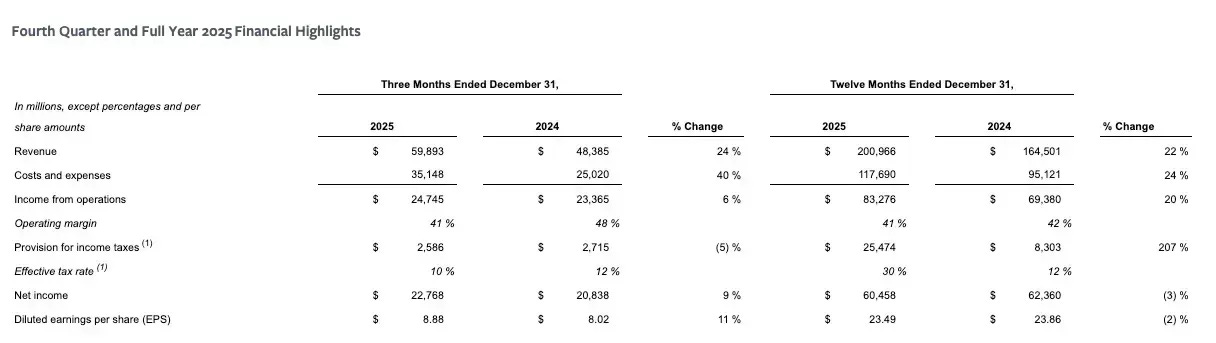
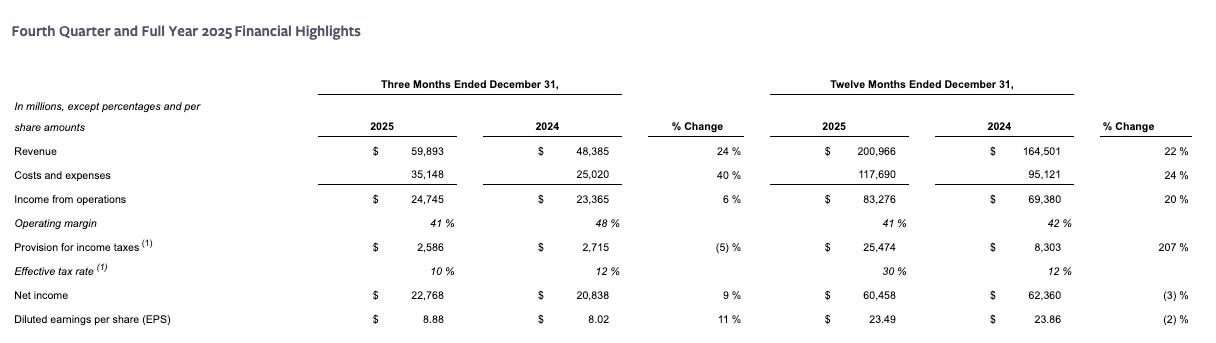
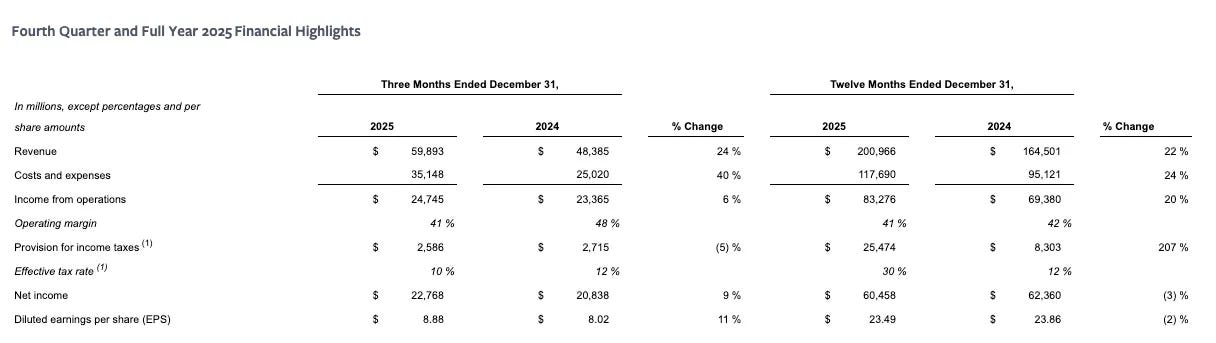
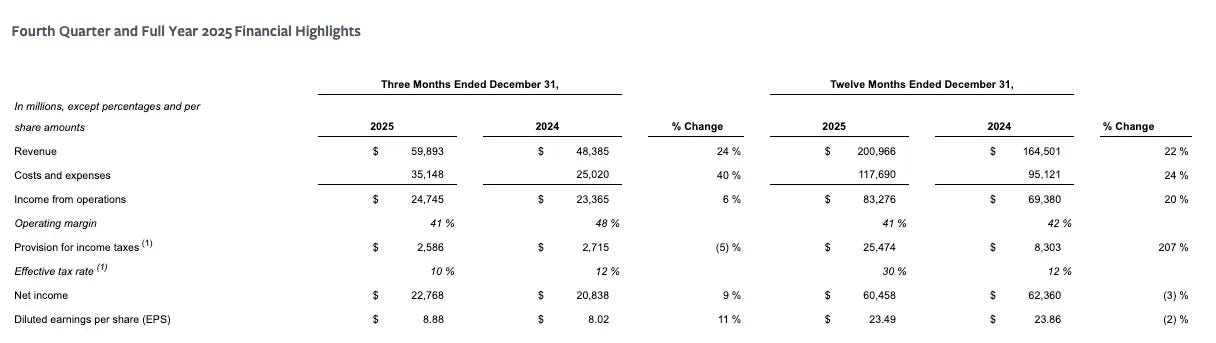
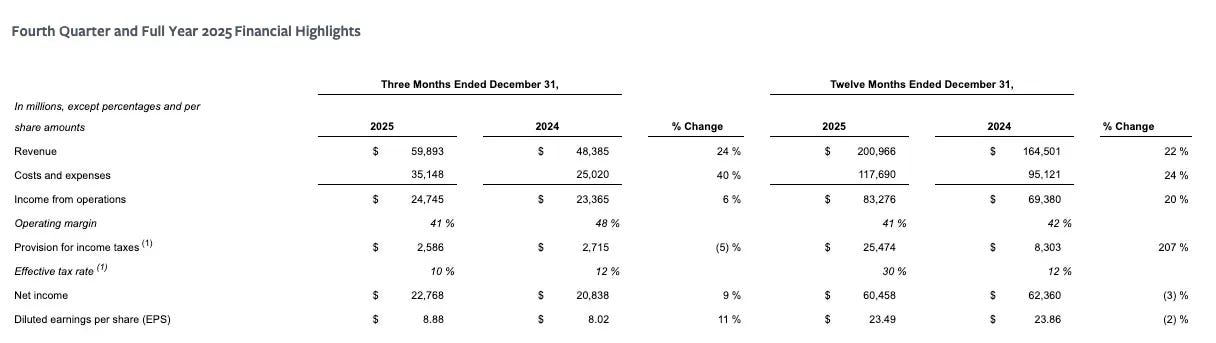
The judgment is over 1.5% of Meta’s net income (profit) in 2025. Hypothetically, if every state landed a billion dollar judgment, that’s 82% of Meta’s annual profits.
If instead of each state landing a billion dollar judgment, their judgment is based on youth population size relative to New Mexico, that figure starts looking more like TWICE their annual profits.
And then there is Europe, Africa, Australia, Asia, South America.
This is the beginning. This is the way.
Now all Anything for a Buck Zuck has to do is stop harming people, not just children, EVERYWHERE. Not just New Mexico. I'm confident this dishonest company won't. At least not voluntarily.